

Get to know the place
History and identity
The Lungovalle is an important panoramic and urban thoroughfare, created as a hinge between the modern expansion of Massafra and its medieval core. The walk runs along the western edge of the Gravina di San Marco, a deep karst canyon shaped over thousands of years by the erosive action of water. The particular microclimate of the valley floor has encouraged dense wild vegetation typical of Mediterranean scrub, which earned the site its historic name of “Paradiso di Massafra” (Massafra’s Paradise). Until the 19th century the edge of the ravine was a natural, impassable defensive boundary; today the thoroughfare offers a privileged vantage point for understanding how people have shaped the territory, showing the sharp contrast between architecture carved into the rock and masonry buildings, linked by the monumental Ponte Vecchio.
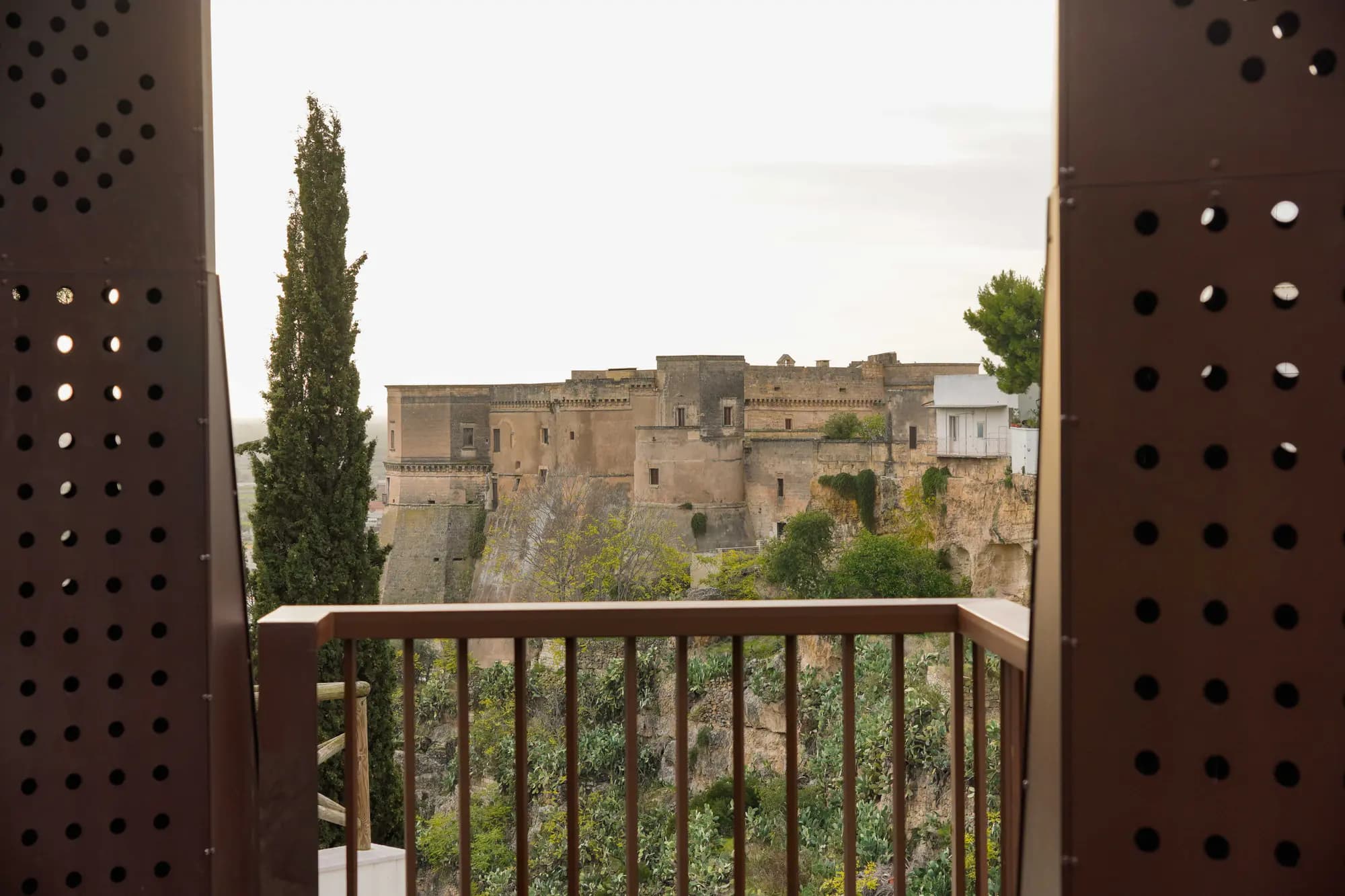
Against this backdrop, perched on a high rocky spur called “lo Pizzo”, stands the Castle. This strategic, commanding position gave complete visual control over the Gravina di San Marco below and over the main routes linking Taranto with the inland Murge. The earliest documentary traces of a fortified urban core date from 971 AD, at the height of the incastellamento (the spread of fortified settlements). The surviving monumental evidence and structures do not currently show any visible elements attributable to the Norman or Swabian period. The oldest appearance of the complex can be ascribed to the radical military engineering works carried out between the 13th and the 15th century. Under Angevin rule and the subsequent Aragonese takeover, the building underwent a thorough defensive reconstruction, with thickened curtain walls and ramparts adapted to the introduction of the first firearms. Within this fortified layout, the octagonal tower, on the south-east side overhanging the edge of the gravina, stands out clearly from the other three round corner towers, and is the most distinctive stylistic and geometric feature of the whole complex. Entirely rebuilt in the 18th century at the wish of the Imperiali, princes of Francavilla, the tower marked the fortress’s change of function into a lavish noble residence. This late Baroque rebuilding was entrusted to the renowned Lecce architect Mauro Manieri.
Images
Gallery
Information last checked: .